

What are the two kinds of AI ad tools?
One kind makes a presenter. An AI actor stands in front of the camera and speaks a script, and the product is something the actor talks about or holds. The other kind makes scenes. The product is the hero, and the camera moves around it in a place you describe.
Neither kind is better in general. They answer different questions. I am describing categories here and not naming products, so that nothing I write is a claim about a tool I have not tested for you.
When does a talking actor fit?
- The ad is a direct message: here is the offer, here is why.
- You sell a service or an app, where there is little to show.
- You want a spoken explanation with a face.
- You test scripts more than visuals.
In these cases a presenter carries the ad, and the product scenes matter less. HubContent is not the right tool for this job.
When do product scenes fit?
- You sell a physical item that looks good in motion: skincare, clothing, food, a gadget.
- The ad should show the item, its detail and where it lives.
- You want several openings, settings and ratios from one photo.
- You do not want a person to speak at all.
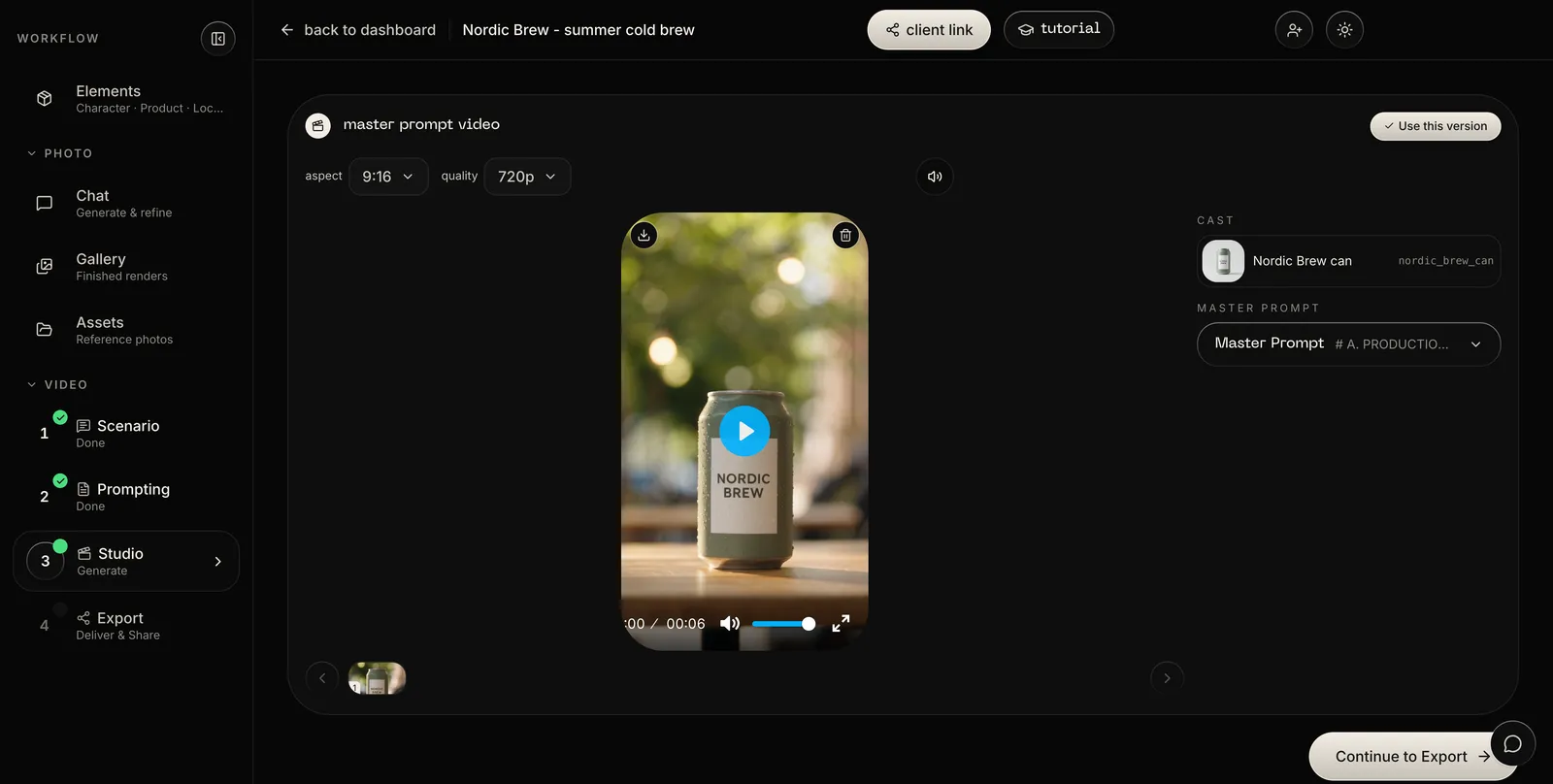
In HubContent you give a photo and a brief, the studio writes the scenes, and you generate them, compare them with the real item and add sound. The AI video ad generator page shows the flow.
What are the limits of each?
A talking actor is a synthetic person, so viewers can find it uncanny, and it must not be passed off as a real customer. A product scene is a generated place, so fine detail on the product can drift and must be checked.
- Actor ads depend on the script and the delivery.
- Scene ads depend on the photo, the brief and your checks.
- Both need a review before they go live.
- Neither tells you which ad will win. Your ad account does.
Where does UGC-style fit between the two?
It sits between them. HubContent can build UGC-style scenes: you define a character, add the product photo and describe a phone-height, natural-light look. The character acts and handles the product. It does not speak to camera in a lip-synced way.
The people are AI characters and must not be shown as customers. The AI UGC ads page is honest about this. I compare the real-creator route in AI video ad vs UGC creator: what does each one cost?.
What does the scene route cost?
A 15 second video at 720p is 515 credits, which is $5.15. Starter is $9 a month and is for a personal test. Creator, $39 a month, grants 3,900 credits and includes the commercial license, about 7 videos of 15 seconds. Pro, $99 a month, is for about 19 videos plus 4K export.
I do not quote prices for other tools. Their plans change often, so check their own pricing pages.
Can I use both kinds?
Yes. A presenter ad and a product-scene ad serve different moments. One explains, and the other shows. A brand can run a talking ad for people who need the reasoning and a product-scene ad for people who need to see the item.
I have not tested which pairing performs better, so I will not tell you. Test it in your account.
How can I test both on a small budget?
Pick one product and one message. Make one presenter ad and one product-scene ad with the same message, and run them with the same budget and audience. Compare the cost per result you already track.
Make the test fair. Use the same offer line in both and the same ratio and length, so that the difference you see comes from the type of ad and not from something else.
What about trust and the uncanny feeling?
A synthetic presenter can feel off to some viewers, and a product scene with no person carries no such risk, though it carries a different one: the product may drift. I have no data on how viewers react to either, so I will not claim one is safer.
Whatever you choose, do not present an AI character as a real customer. That is the line that matters most for trust.
Does a product-scene ad need a script?
It needs a brief and a scene list, and a line or two of on-screen text. HubContent drafts the scenes from your idea, and you read and edit them before anything is generated. There is no long monologue to write.
If your ad needs a spoken script, that is a sign you may want a presenter or a real person instead.
How do I choose?
- Write down what the ad has to do: explain, show, or prove.
- If it has to explain with a face, use a presenter or a real person.
- If it has to show a physical item, use product scenes.
- If it has to prove, film the real item.
For product brands who want to try the scene route, the page for brands has the flow, and the filmed alternative is in AI video ad vs a filmed product video.